

Google Antigravity and Gemini 4 Argon: The Quantum Leap in Autonomous Agents and Enterprise Software Engineering
Google DeepMind unveiled Antigravity powered by Gemini 4 Argon: the new agentic development platform with deep autonomous reasoning, sandboxes, and enterprise-scale refactoring.
Key Takeaways
- Gemini 4 Argon scores 74.8% on SWE-bench Verified, outperforming previous reasoning models in autonomous bug fixing and complex PR resolution.
- Google Antigravity provides an agentic runtime environment with secure sandboxes, persistent repository memory, and native multi-agent orchestration.
- The model introduces 'Argon Reasoning Loops', allowing agents to verify hypotheses, run unit test suites, and fix regressions before human sign-off.
- 60% reduction in cycle times for framework migrations and legacy technical debt refactoring across multi-million line codebases.
- Nubework integrates Google Antigravity into its accelerated engineering workflows to deliver production-ready cloud and SaaS platforms in record time.
On October 14, 2026, Google DeepMind unveiled Google Antigravity, a groundbreaking software development platform driven by autonomous agents and powered by its new flagship model: Gemini 4 Argon. This launch represents a definitive turning point in the software industry: the evolution from reactive autocomplete copilots to true software engineer agents that proactively plan, debug, test, and refactor code.
Gemini 4 Argon was trained from the ground up to understand not just programming syntax, but complex dependency graphs, distributed API contracts, and enterprise software architecture patterns. When combined with the Antigravity runtime, engineers no longer write code line by line; instead, they direct teams of specialized agents operating inside hermetic sandboxes.
At Nubework, we analyze the technical capabilities of Gemini 4 Argon, its closed-loop verification architecture, and how this breakthrough redefines enterprise software engineering productivity and governance.
Gemini 4 Argon: Prolonged Reasoning and 74.8% on SWE-bench Verified
Unlike previous generations reliant on shallow sampling heuristics, Gemini 4 Argon incorporates an adaptive inference-time compute engine. On complex engineering tasks benchmarked under SWE-bench Verified, Argon autonomously resolves 74.8% of real-world open-source repository issues—identifying relevant files, reproducing errors via automated test cases, and applying clean, well-documented patches without manual oversight.
Google Antigravity Architecture: Hermetic Sandboxes and Codebase Memory
Antigravity is not merely a chat sidebar inside an editor; it is a full runtime infrastructure for software agents. Each working session executes agents inside isolated ephemeral containers (gVisor sandboxes) where agents can install dependencies, compile binaries, spin up local test servers, and drive headless browsers to verify visual regressions. Context persistence is governed by a semantic codebase knowledge graph indexing symbols, git history, and internal architecture documentation in real time.
The Human-in-the-Loop Pattern in Mission-Critical Systems
Despite Gemini 4 Argon's unprecedented autonomy, Google and enterprise engineering standards mandate deliberate human oversight. Antigravity incorporates contractual checkpoints: any operation modifying data contracts, cloud infrastructure (IaC), or database schemas requires explicit validation from the supervising senior architect. This safeguards against hallucinations and ensures design decisions align strictly with organizational compliance policies.
Accelerating Legacy Modernization and Architectural Migrations
One of the greatest operational bottlenecks in enterprise IT is accumulated technical debt. With Antigravity and Gemini 4 Argon, multi-quarter modernization projects—such as decoupling legacy Java monoliths into Go/TypeScript microservices or refactoring outdated frontend frameworks—can be executed via coordinated agent pipelines that establish comprehensive test suites before transforming business logic.
How Nubework Integrates Antigravity into Enterprise Delivery
At Nubework, we adopt Antigravity and frontier Google models as force multipliers for our senior engineers. By delegating repetitive boilerplate, API wiring, and mechanical unit tests to autonomous agents, our architects focus on driving high-impact business architecture, zero-trust security, and operational resilience. This enables us to deliver production-ready platforms in accelerated 8-to-12 week engagements with uncompromising quality.
Sources
Want to apply this in your organization?
Talk to a Nubework architect.
Related Articles
Agentic AI
Anthropic Warns of Self-Replicating AI Worms Colonizing Smart IoT Devices
Agentic AI
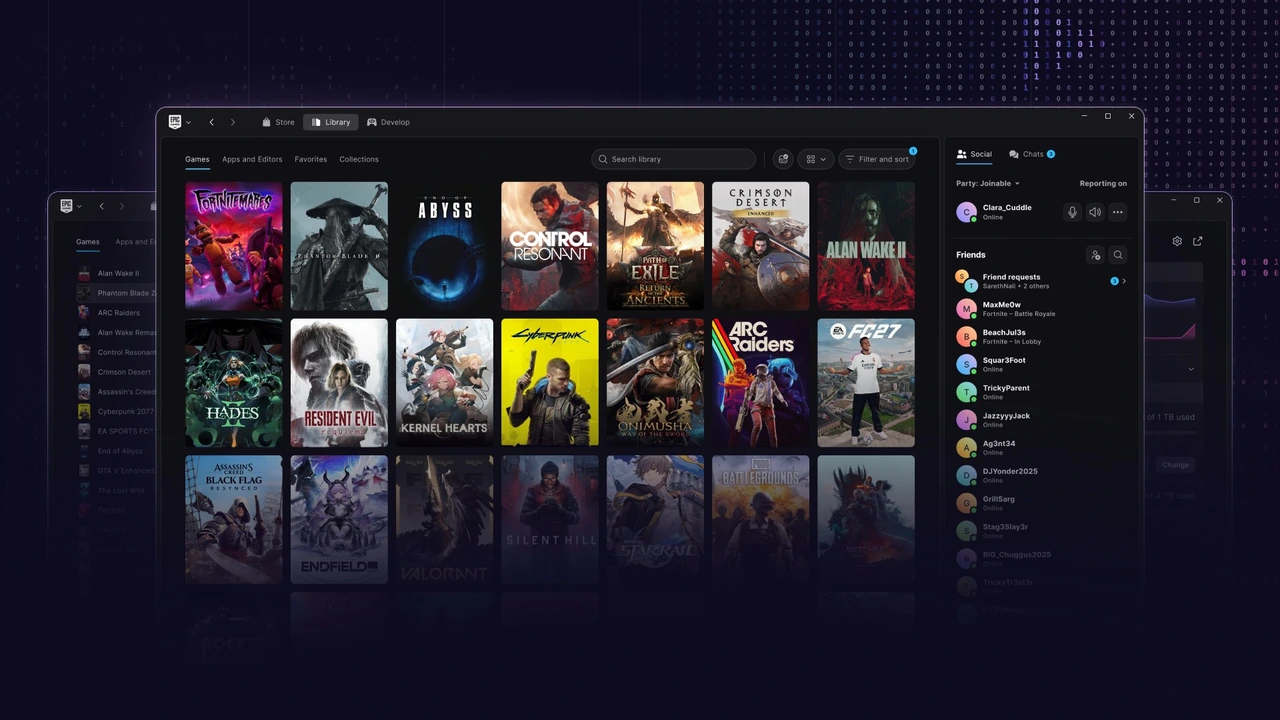
Epic Games Goes All-In on 'Vibe Coding': How AI Agents Rebuilt the Launcher and Unlocked Linux Support
Agentic AI