

The Rise of Agentic AI in Enterprise Operations
How autonomous and orchestrated AI agents are transforming complex workflow execution, eliminating operational latency, and guaranteeing human oversight at every critical milestone.

Key Takeaways
- Evolution from passive chatbots to active autonomous agents with ReAct reasoning loops.
- Multi-agent orchestration delivering 75% operational cost reduction in repetitive cognitive tasks.
- Granular Human-in-the-Loop (HITL) governance with immutable forensic trail for high-impact actions.
- Over 99.5% data processing accuracy and automated incident self-healing drastically reducing MTTR.
The shift from passive AI models — traditional chatbots that respond to queries in a purely reactive manner — to active agentic systems represents the single largest quantitative leap in software engineering productivity of the decade. This evolution is not incremental; it represents a complete paradigm shift in how organizations conceive and execute complex cognitive work at enterprise scale.
In modern software engineering, an agentic workflow doesn't merely generate code snippets or answer questions. It interprets ambiguous business requirements, validates architectural dependencies across multiple repositories, executes comprehensive unit test suites with built-in self-healing capabilities, and deploys microservices directly to production environments while respecting mandatory human approval gates defined by the engineering team. The agent is, in essence, a highly specialized engineering colleague that never sleeps.
At Nubework, we implement this paradigm by combining advanced reasoning models with iterative decision loops (ReAct: Reason-Act-Observe) executed inside completely isolated execution environments. Each agent operates within strict permission boundaries defined by RBAC security policy, validating all inputs and outputs against cryptographically signed immutable JSON schemas. This guarantees total execution determinism, forensic traceability, and production-grade reliability.
Deploying agentic systems at enterprise scale across sectors such as Fintech, Logistics, Retail, and Manufacturing consistently delivers measurable results: an average 75% reduction in operational costs associated with repetitive cognitive processes (document classification, financial reconciliation, first-level incident response), a 5x improvement in execution cycle velocity, and over 99.5% accuracy in structured data extraction and classification. These are not isolated case studies; these are production averages sustained over at least 12 months.
The true differentiating factor is the design of agentic governance. This is not about blind automation. Long-term success requires carefully designing which decisions an agent can make autonomously and which require human validation. At Nubework we apply the Human-in-the-Loop (HITL) principle in a granular and configurable way: for financial transactions exceeding defined thresholds, modifications to critical infrastructure, or interactions with regulated data, the agent pauses execution, presents its full reasoning chain, and awaits explicit human approval. Every one of these interaction decisions is recorded in immutable, cryptographically timestamped audit logs.
The Evolution: From Conversational Models to Autonomous Agents
Over recent years, enterprise AI adoption was dominated by passive conversational interfaces that responded to prompts reactively. The paradigm has shifted transformationally toward Agentic AI: autonomous software entities architected with iterative reasoning loops (ReAct), short and long-term contextual memory via vector stores and graph databases, and the capability to directly interact with real enterprise tools — ERP systems, CRMs, code repositories, third-party APIs, and monitoring platforms. Unlike a chatbot, an agent has goals, plans, and the ability to act. The difference is analogous to an advisor who gives suggestions versus an engineer who actually executes the work.
The Enterprise Operational Bottleneck
Established organizations face critical bottlenecks in decision chains: the inherent latency of human decision-making (approval meetings, hierarchical escalations) and the fragility of rule-based traditional automation (RPA). Standard RPA breaks down the moment it encounters an exception not explicitly coded in its decision tree — and in real enterprise environments, exceptions are the norm, not the exception. Agentic AI resolves this elegantly: it dynamically evaluates the current environment state, formulates multi-step plans adapted to the specific context, executes actions, and observes results to iteratively adjust the plan. It does not require manual coding of every edge case; it reasons through them.
Multi-Agent Orchestration Architecture
Deploying reliable agentic systems in production requires more than a single LLM acting in isolation. We design multi-agent architectures governed by an intelligent central orchestrator, following patterns like Manager-Worker and Supervisor-Subagent. Specialized agents — the Data Analyst, the Security Auditor, the Deployment Agent, the Documentation Writer — collaborate in asynchronous pipelines, passing structured messages validated against immutable JSON schemas. This ensures that the failure of one specialized agent does not block the complete pipeline, and that every produced artifact can be independently verified and audited. Observability is critical: every step of the agentic reasoning process is logged for downstream analysis.
Production Metrics & Business Impact
The numbers speak for themselves. In documented production deployments across Fintech, Logistics, and Retail sectors, Nubework's agentic systems have consistently delivered: 75% reduction in operational costs of repetitive cognitive processes (measured over 12-month periods), 5x faster execution cycle velocity compared to equivalent human teams, 99.5% accuracy in structured data classification and extraction, and an 80% reduction in off-hours support incidents thanks to agents' self-healing capabilities. Agents detect anomalies, diagnose root causes, and execute remediations while human teams sleep, reducing MTTR (Mean Time to Recovery) from hours to minutes.
Human-in-the-Loop Governance & Adoption Roadmap
The sustainable success of Agentic AI in enterprise environments requires balancing autonomy with intelligent oversight. At Nubework we apply the Human-in-the-Loop (HITL) principle in a granular, configurable manner: agents operate with full autonomy on low-risk, high-volume tasks, while for high-impact actions — financial transactions exceeding defined thresholds, modifications to critical infrastructure, or decisions affecting end customers — the system pauses execution, presents the full reasoning chain to the human operator, and awaits explicit approval. This entire decision chain is recorded in immutable audit logs with cryptographic timestamps, guaranteeing complete forensic traceability for regulatory audits.
Want to apply this in your organization?
Talk to a Nubework architect.
Related Articles
Agentic AI
Anthropic Warns of Self-Replicating AI Worms Colonizing Smart IoT Devices
Agentic AI
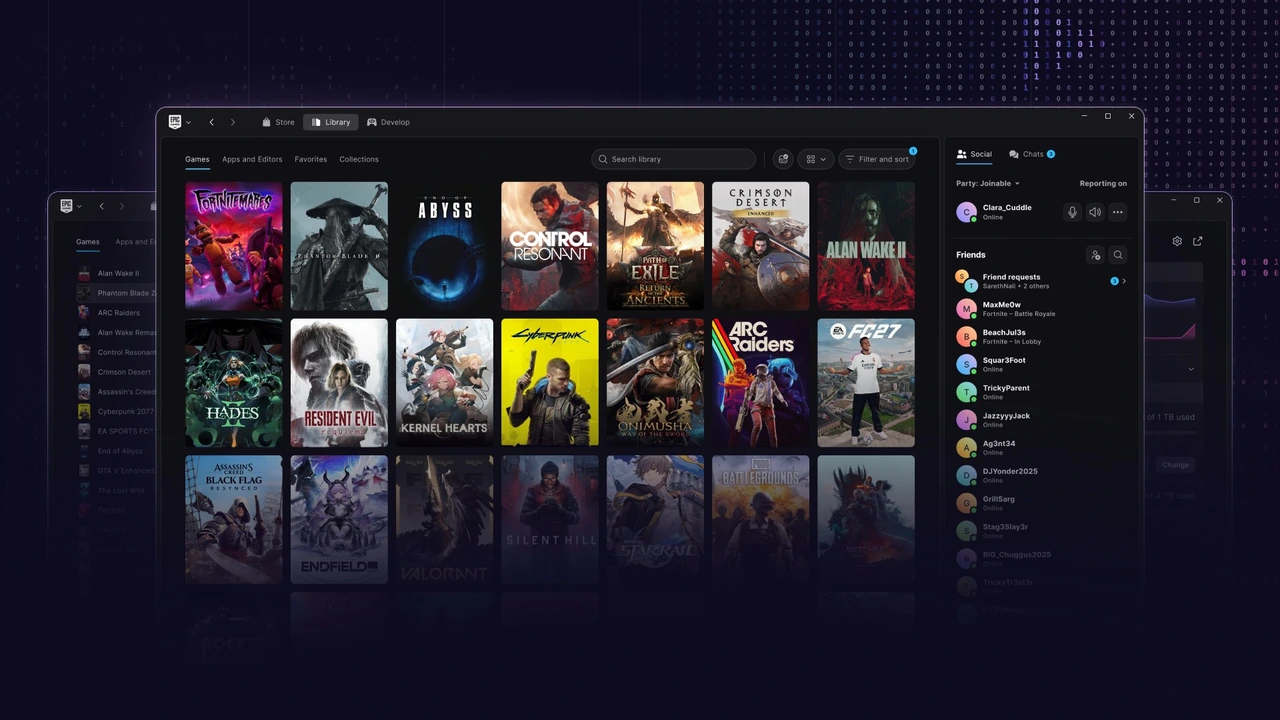
Epic Games Goes All-In on 'Vibe Coding': How AI Agents Rebuilt the Launcher and Unlocked Linux Support
Agentic AI